


30 Nov 1994 [2] Definitive Treatment of Peptic Ulcer Disease by Eradication of Helicobacter Pylori (H.pylori)
 The following quotation by a Gastroenterologist, Dr. Ransohoff, amply defines the impact of the discovery of H.pylori on our thinking about peptic ulcer disease:
The long-held hypothesis that duodenal ulcer disease is caused primarily by acid has, after a decade of siege by the H.pylori hypothesis, finally collapsed. That the acid hypothesis could even be challenged, much less toppled, appeared as unthinkable 10 years ago as the fall of Communism in the former USSR. Within the last few years, strong evidence has accumulated, however, about H.pylori‘s importance, persuading even this previously skeptical writer.”(1)
What is H. pylori?
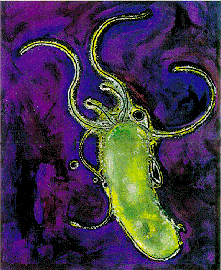
H. pylori is a gram-negative, microoerophilic, spiral bacillus (see Figure) originally cultured in 1982 from gastric biopsy specimens in patients with documented gastritis.
What conditions are associated with H. pylori infestation?
Strong evidence demonstrates that H. pylori is a causal factor in gastritis and duodenal ulcer(2) and to a lesser extent gastric ulcer. Moderate epidemiologic evidence supports a relation between H. pylori and gastric adenocarcinoma and lymphoma.
What upper GI conditions are not associated with H. pylori infestation?
Most evidence indicates that NSAID induced ulcers and reflux esophagitis are not associated with H. pylori infestation. There is insufficient evidence to link non-ulcer dyspepsia symptoms with H. pylori.(2),(3) Proper randomized controlled trials are needed to investigate this relationship.
What treatments have been satisfactorily tested at this time?
A meta analysis of the results of treatment in adults is shown in Table 1 . The ulcer recurrence rate at 1 year is less than 10% if H. pylori is eradicated and greater than 50% if H. pylori is not eradicated.
Table 1: Results of Treatment of Helicobacter pylori (5),(7)
| Treatment | H. pylori eradication rate * (n) |
|---|---|
| H2 blockers alone | No effect |
| Omeprazole alone | No effect |
| Bismuth and amoxicillin | 44% (197) |
| Bismuth and metronidazole | 55% (118) |
| Omeprazole and amoxicillin | 58% (433) # |
| Bismuth, metronidazole and amoxicillin | 73% (130) |
| Bismuth, metronidazole and tetracycline | 94% (434) |
* measured one month after stopping antibolics || (n) number of patients in meta-analysis || # meta-analysis done by the Therapeutics Initiative
What are the advantages to my patient if H. pylori is successfully eradicated?
Most patients with recurrent peptic ulcer disease will be “cured”. This means they will no longer need any maintenance therapy for suppression of ulcer symptoms. In a recent study of 35 patents in whom H. pylori was effectively eradicated, 32 (92%) remained H. pylori and ulcer negafive after an average follow-up period of 7 years.(4)
What is the best treatment and how long do you treat?
The dose and duration of the two most effecfive regimens are shown in Table 2. The addition of an agent to decrease acid production (e.g. cimetidine) improves symptom resolution in the first week, but has no effect on ulcer resolution or H. pylori eradication.(7)
Table 2: Triple therapy regimens
| Medication | Dose | Duration | Trade Names | Daily ingredient cost* |
|---|---|---|---|---|
| Bismuth subsalicylate | 30 ml QID | 1 week(7) | Peptol Bismol | $1.26^ |
| Tetracycline # | 500 mg QID | 1 week(7) | Achromycin, Tetracyn, Medicycline Novotetra, Nu Tetra |
$0.16 |
| Metronidazole | 250 mg QID | 1 week(7) | Flagyl, NeoTric, Novonidazol, Trikacide | $0.12 |
| Or Replacement of Tetracycline # with: | ||||
| Amoxicillin | 500 mg QID | 2 weeks for each of the 3 ingredients (5) |
Amoxil, ApoAmoxi, Axicillin Novamoxin, Nu Amoxi, Pro Amix |
$0.84 |
# tetracycline is contraindicated in children and during pregnancy || ^ over the counter || * lowest cost alternative formulation (BC, 1993)
What about safety and compliance?
The incidence of side effects with the one week triple therapy (tetracycline) regimen was 14 out of 210 (7%) including dizziness, nausea, metallic taste and diarrhea. Side effects due to local gastric irritation can be minimized by taking the medication together with a glass of water. It is important to emphasize the importance of compliance to the patient; with triple therapy H. pylori was eradicated in 96% of patents who took more than 60% of the medication. Shorter, simpler and equally effective regimens may become available, but the data are insufficient at this time.
When should you treat H. pylori infection?
- All patients with proven gastric or duodenal ulcers who are infected with H. pylori.
- Patients with previously proven recurrent duodenal ulcers who are currently requiring maintenance antiulcer therapy.
- For management of the small number of peptic ulcers in children a definifive endoscopic and microbiological diagnosis is advisable.(6)
References
- Ransohoff DF. Commentary. Ann lnt Med (ACP Joumal Club suppl.) 1994, May/June; 62-63.
- Sander JO, Veldhuyzen van Zanten SJ, Sherman PM: Helicobacter pylori infection as a cause of gastritis, duodenal ulcer, gastric cancer and nonulcer dyspepsia: a systematic overview. Can Med Assoc J 1994; 150(2):177-185.
- Sander JO, Veldhuyzen van Zanten SJ, Sherman PM: Indications for treatment of Helicobacter pylori infection: a systematic overview. Can Med Assoc J 199A; 15OJ2):189-198.
- Forbes GM, Glaser ME, Cullen DJE, Warren JR, Christiansen KJ, Marshall BJ, Collins BJ: Duodenal ulcer treated with Helicobacter pylori eradication: year follow-up. Lancet 1994; 343:258-260.
- Chiba N, Rao BV, Rademaker JW, et al: Meta-analysis of the efficacy of antibiotic therapy in eradicating Helicobacter pylori. Am J Gastroenterol 1992; 87:1716-1727.
- Hassall E: Clinical practice guidelines for suspected peptic ulcer disease in children. BC Med J, 1994; 36(8): 538-539.
- Hosking SW, Ling TK, Chung SC, Yung MY, Cheng AF, Sung JJ, Li AK: Duodenal ulcer healing by eradication of Helicobacter pylori without antacid treatment: randomized controlled trial. Lancet 1994; 343(8896):508-10. DOI: 10.1016/s0140-6736(94)91460-5
No Comments